Every year, aspiring Personal Trainers complete their qualifications and enter the fitness industry eager to begin coaching clients.
Many assume that once they have their Certificate III and Certificate IV in Fitness, securing opportunities within a gym will be relatively straightforward.
But ask any gym manager what they look for when hiring new Personal Trainers, and you’ll quickly discover that qualifications are only part of the equation.
The reality is that most candidates entering the industry have similar certifications. What separates one applicant from another is often not what appears on paper, but how prepared they are to work with real clients, contribute to a gym environment, and represent the profession.
This is where many new Personal Trainers underestimate the industry.
Getting qualified is essential. Becoming employable is something different.
Qualifications Open Doors. Capability Creates Opportunities.
There is no question that recognised qualifications remain the foundation of a career in fitness.
In Australia, aspiring Personal Trainers typically complete the SIS30321 Certificate III in Fitness followed by the SIS40221 Certificate IV in Fitness. Together, these qualifications provide the technical knowledge required to work within the industry and begin coaching clients professionally.
However, qualifications alone rarely determine who gets hired.
From an employer’s perspective, certifications demonstrate that a candidate has met the educational requirements. What gym managers are often trying to determine is whether that individual can apply their knowledge effectively in a real-world coaching environment.
Can they communicate confidently?
Can they build rapport with clients?
Can they contribute positively to the culture of the gym?
Can they represent the business professionally?
These are the questions that often influence hiring decisions.
The Industry Has Changed
The role of a Personal Trainer has evolved significantly over the past decade.
While technical knowledge remains important, today’s coaches are expected to deliver much more than exercise programs.
Clients are looking for guidance, accountability, motivation, communication, and support. They want someone who can help them navigate challenges, stay consistent, and build confidence throughout their fitness journey.
As a result, employers are increasingly looking for coaches who possess strong interpersonal skills alongside their technical expertise.
The ability to connect with people has become just as valuable as understanding programming.
In some cases, even more valuable.
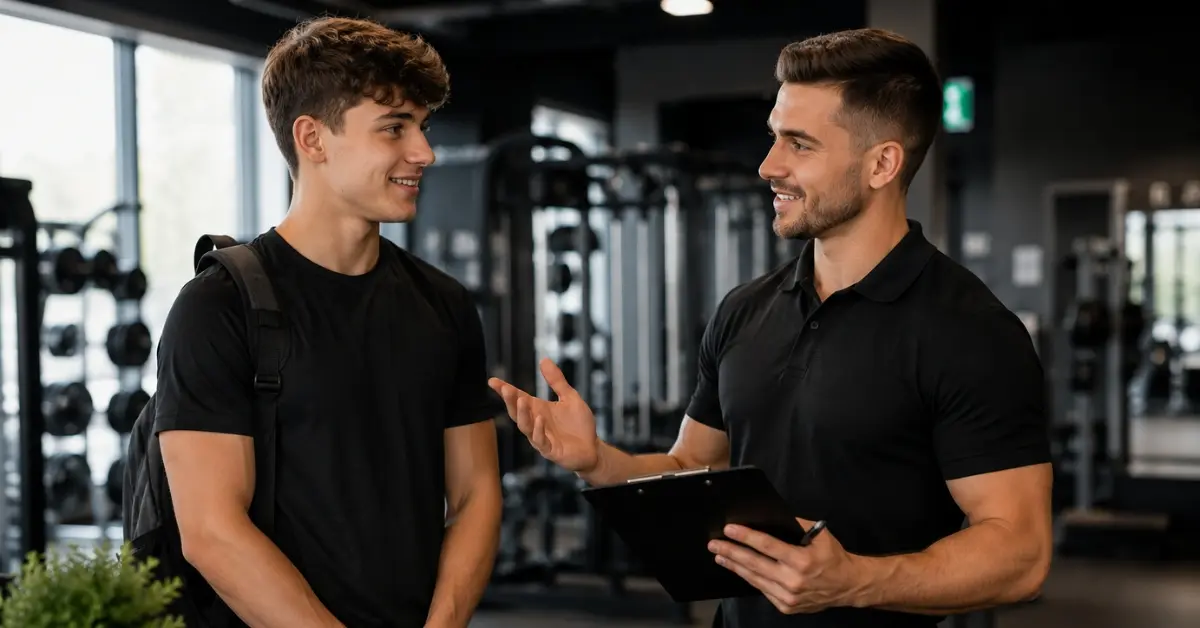
Communication Is One of the Most Valuable Skills a New PT Can Develop
Many gym managers will tell you that they can help a coach improve their technical knowledge over time.
Teaching communication is often much harder.
The most successful Personal Trainers are usually those who can create trust quickly, listen actively, and make clients feel comfortable from the very first interaction.
This is particularly important for new personal trainers entering a commercial gym environment, where building relationships often plays a major role in attracting and retaining clients.
Clients don’t stay because a coach uses complicated terminology or demonstrates advanced exercise science knowledge.
They stay because they feel understood.
The ability to simplify information, communicate clearly, and create a positive experience is often what turns an enquiry into a long-term client.
Confidence Doesn’t Come From Qualifications Alone
One of the biggest challenges for new Personal Trainers is confidence.
Not because they lack knowledge, but because they haven’t yet accumulated enough coaching experience.
There is a significant difference between understanding a concept in theory and applying it with a real client standing in front of you.
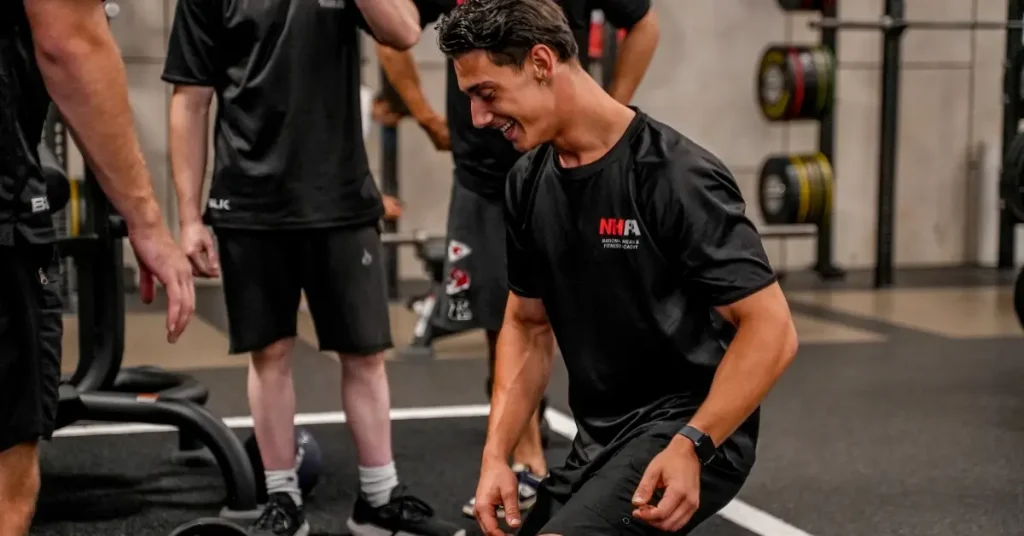
This is why practical experience has become such a valuable part of fitness education.
The more opportunities students have to coach, communicate, and problem-solve in realistic environments, the more prepared they are when entering the workforce.
Employers recognise this immediately.
A candidate who has spent time applying their skills often presents differently to someone whose experience has been limited to assessment tasks alone.
They communicate with more confidence, adapt more effectively, and generally transition into the industry more smoothly.
Professionalism Still Matters
While fitness is a people-focused industry, professionalism remains one of the strongest indicators of long-term success.
Gym managers are not simply hiring a coach.
They are bringing someone into their business, their team, and their community.
Reliability, punctuality, presentation, initiative, and attitude all influence how a new Personal Trainer is perceived.
These qualities may seem simple, but they often become the difference between a coach who builds momentum quickly and one who struggles to gain trust.
The most successful Personal Trainers understand that every interaction contributes to their professional reputation.
Coachability Is Often Overlooked
Another quality employers consistently value is coachability.
The fitness industry continues to evolve, and the best coaches are usually the ones who remain open to learning.
New trainers who actively seek feedback, ask questions, and embrace development opportunities often progress much faster than those who believe their education ends after graduation.
Gym managers know that technical skills can be developed.
What they want to see is a willingness to improve.
Because long-term success in fitness rarely comes from knowing everything.
It comes from continuing to learn.
What Employers Really Want
When you step back and look at the bigger picture, most gym managers are searching for the same thing.
They want Personal Trainers who can create positive experiences for clients.
That means finding people who combine:
- Technical knowledge
- Communication skills
- Confidence
- Professionalism
- Coachability
- A genuine desire to help others
Qualifications remain an important starting point, but they are rarely the sole reason someone succeeds in the industry.
The coaches who build lasting careers are the ones who can translate knowledge into real-world coaching outcomes.
Final Thoughts
The fitness industry doesn’t need more qualified people.
It needs more capable coaches.
While recognised qualifications remain the foundation of a Personal Training career, employers are increasingly looking beyond certificates and focusing on the qualities that influence client experience, retention, and long-term success.
Communication, professionalism, confidence, and practical coaching ability have become some of the most valuable skills a new Personal Trainer can develop.
This is why the learning environment matters.
At NHFA, education extends beyond assessment outcomes. Through the SIS30321 Certificate III in Fitness and SIS40221 Certificate IV in Fitness, students develop the practical coaching skills, industry awareness, and professional confidence required to transition into real coaching environments. By delivering practical workshops within real gym settings and maintaining strong industry partnerships across Australia, NHFA helps bridge the gap between qualification and application.
Because becoming a Personal Trainer is about more than earning a certificate.
It’s about developing the capability to coach people, create results, and build a successful career within an evolving industry.
your fitness career starts here
Practical Training. Real Coaching Skills.
Explore NHFA’s nationally recognised fitness qualifications and discover how you can start coaching in as little as four months.
Enquire Now