There’s a noticeable shift happening in the fitness industry.
Gym managers are no longer asking only whether a graduate has completed their qualification. Increasingly, they’re asking whether that graduate is ready to coach real clients.
It’s an important distinction.
A qualification demonstrates that a student has met the required educational standards. Industry readiness, however, is developed through experience, through communicating with people, adapting to different personalities, solving problems in real time, and learning how a gym operates beyond the classroom.
This is why practical education has become one of the defining features of modern fitness training.
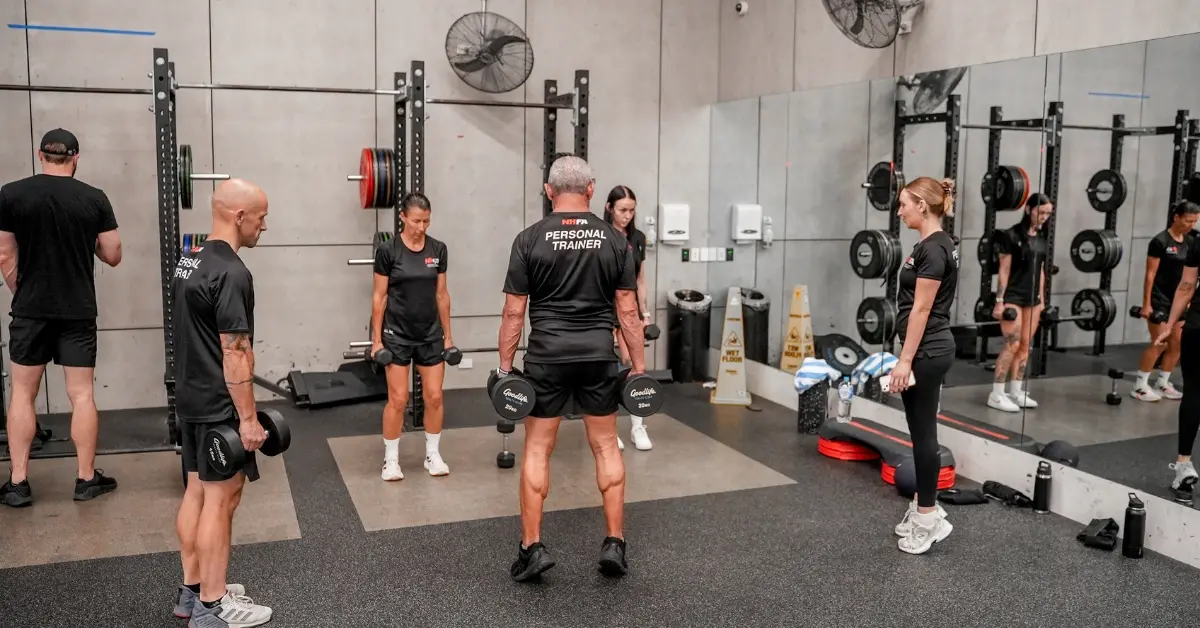
At NHFA, it’s also why practical workshops are delivered inside real gyms across Australia.
The Difference Between Learning About Coaching and Actually Coaching
Every aspiring Personal Trainer begins by learning the science behind exercise.
Understanding anatomy, physiology, exercise prescription and program design is essential. These foundations help coaches make safe, informed decisions and provide evidence-based guidance to clients.
But coaching is more than knowledge.
The reality is that no textbook can fully prepare someone for their first client conversation, their first movement assessment, or the moment they need to adapt a session because a client arrives feeling tired, injured, or lacking confidence.
Those situations require judgement, communication and adaptability, skills that are developed through experience.
This is where practical learning becomes invaluable.
Real Coaching Happens in Real Environments
Fitness professionals work in busy gyms where clients have different goals, confidence levels, personalities and expectations.
Learning within that environment helps students understand the realities of the profession long before they begin their careers.
They become familiar with the pace of a gym floor, learn how to communicate professionally with members, and gain experience coaching people rather than simply discussing coaching concepts.
Just as importantly, they begin developing confidence. Confidence isn’t something that’s taught behind a screen. It’s built through repetition, practical application and exposure to genuine coaching situations.
Practical Experience Builds Professional Confidence
One of the biggest challenges new Personal Trainers face isn’t knowledge.
It’s confidence.
Many graduates know the theory but hesitate when it’s time to lead a session, correct technique or explain an exercise to a client.
This confidence gap is common because applying knowledge requires a different skill set from remembering information.
Practical workshops help bridge that gap.
By coaching in real gym environments, students become more comfortable communicating with clients, demonstrating exercises, providing feedback and making coaching decisions under the guidance of experienced educators.
These experiences help transform theoretical understanding into practical capability.
Preparing Students for the Industry, Not Just the Assessment
The purpose of fitness education extends beyond helping students complete assessments.
It should prepare them for the profession they’re about to enter.
Today’s Personal Trainers are expected to build relationships, communicate effectively, adapt their coaching style and create positive experiences that encourage clients to stay engaged over the long term.
These are skills that develop through practice.
Learning in real gyms allows students to experience the professional standards, expectations and responsibilities that come with working in the industry.
Rather than waiting until graduation to discover what coaching looks like, students begin developing these skills throughout their education.
Learning Alongside Industry Partners
Delivering practical education inside established gyms also strengthens the connection between learning and employment.
Students gain exposure to professional fitness environments while developing an understanding of how successful facilities operate, how coaches interact with members, and what employers value when recruiting new Personal Trainers.
This connection helps make the transition from student to industry professional feel far more natural.
Instead of entering their first workplace as a completely unfamiliar environment, NHFA graduates have already spent time learning within settings that closely reflect where many of them will begin their careers.
Education That Reflects the Modern Fitness Industry
The role of a Personal Trainer has changed significantly over the past decade.
Clients expect more than exercise instruction. They value coaches who can communicate clearly, build trust, create accountability and deliver an experience that supports long-term progress.
As these expectations continue to evolve, fitness education must evolve with them.
Developing technically knowledgeable graduates is no longer enough.
The industry also needs confident professionals who can apply that knowledge in meaningful ways.
Practical learning plays a vital role in achieving that outcome.
Why It Matters for Students
Choosing where to study is about more than comparing course structures or qualification names.
It’s about considering the learning experience itself.
Students who regularly apply their knowledge in practical settings often graduate with a stronger understanding of coaching, greater confidence working with clients, and a clearer appreciation of what the profession actually demands.
These experiences not only improve technical capability but also help develop the professionalism, communication skills and adaptability that employers consistently value.
Final Thoughts
A successful career in fitness begins with quality education, but it is shaped by experience.
The most effective Personal Trainers are those who can combine technical knowledge with confident communication, sound judgement and the ability to coach real people in real-world situations.
That’s why practical learning sits at the centre of NHFA’s approach to education.
Through the SIS30321 Certificate III in Fitness and SIS40221 Certificate IV in Fitness, NHFA students don’t simply learn the theory behind coaching. They apply it through practical workshops delivered inside real gyms across Australia, supported by experienced coaches and strong industry partnerships that reflect the realities of today’s fitness profession.
This approach is designed to help students graduate with more than a nationally recognised qualification.
It prepares them to step confidently into the industry, work effectively with clients from day one, and build the practical coaching capability that underpins a successful career as a Personal Trainer.
Because at NHFA, education isn’t measured by what students can recall in an assessment.
It’s measured by how confidently they can coach when it matters most.
Ready to become a successful pt?
speak with an NHFA Course Advisor today
To map out your roadmap with clarity and take the first step toward a career backed by practical skills, confidence, and real-world support.
Enquire Now